

Introduction
Alongside the towering figures of the nation’s founding fathers stands a woman whose influence has been equally profound in shaping the social fabric of the UAE: Sheikha Fatima bint Mubarak. Reverently known as the “Mother of the Nation” (Umm Al Emarat), she is the wife of the late Sheikh Zayed bin Sultan Al Nahyan and mother of the current President, Sheikh Mohamed bin Zayed Al Nahyan. More than a symbolic figure, Sheikha Fatima has been a relentless driver of social progress, a pioneering advocate for women’s empowerment, and a unifying force whose humanitarian and cultural work has touched every corner of the nation. Her life’s work embodies the transition of Emirati women from the private sphere to the very forefront of national development.
The General Women’s Union: A Landmark in Organized Advocacy
Sheikha Fatima’s most significant institutional legacy is the establishment of the General Women’s Union (GWU) in 1975, just four years after the federation was founded. She has served as its President since its inception. The creation of the GWU was a watershed moment. It provided a centralized, official platform to champion women’s issues and coordinate efforts across all seven emirates. Under her leadership, the GWU worked tirelessly to integrate women into the nation-building process, focusing on three key pillars: education, political participation, and economic empowerment. It was the strategic command center from which she launched a quiet but powerful revolution for Emirati women.
Championing Education and Political Participation
Understanding that education was the key to empowerment, Sheikha Fatima was a staunch advocate for female literacy and higher education. She famously stated, “The most important battle in which I have participated throughout my life is the battle to educate women.” Her advocacy was instrumental in making education accessible to girls across the UAE. This focus on education paved the way for political participation. She actively encouraged and supported women to take on leadership roles. Her efforts bore fruit as Emirati women began to be appointed as ministers, ambassadors, and judges, and to win seats in the Federal National Council (FNC), breaking long-standing barriers and setting new precedents.
The Supreme Council for Motherhood and Childhood
Sheikha Fatima’s vision for development was holistic, recognizing that empowering women was intrinsically linked to the well-being of families and children. In 2003, she established the Supreme Council for Motherhood and Childhood, which she also chairs. This council formulates policies and launches initiatives to support mothers, protect children’s rights, and ensure the healthy development of the nation’s youth. This work ensures that the rapid modernization of the UAE does not come at the cost of family cohesion and the healthy upbringing of the next generation, balancing progress with preservation.
A Legacy of Humanitarian and Cultural Patronage
Her influence extends beyond gender issues. As the Chairwoman of the Family Development Foundation, she oversees numerous social support programs. She is also a renowned patron of culture and heritage, actively supporting initiatives that preserve traditional crafts, poetry, and the Arabic language. Her humanitarian work is vast, both within the UAE and internationally, reflecting the same values of compassion and generosity that defined her husband, Sheikh Zayed. Through these multifaceted roles, she has become a moral and cultural compass for the nation.
Conclusion: The Architect of Social Modernization
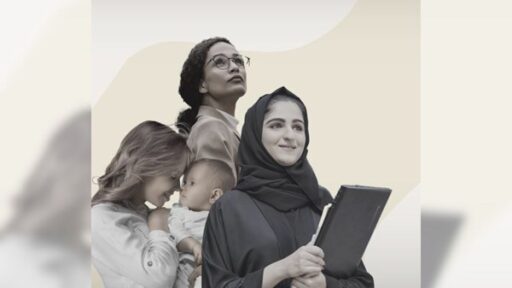
Sheikha Fatima bint Mubarak’s legacy is the modern Emirati woman—educated, confident, and an active contributor to society. She masterfully navigated the complex intersection of tradition and modernity, advocating for change not by rejecting cultural values, but by framing empowerment as a fulfillment of national duty and Islamic principles. From the early days of the union to the present, she has been a constant, stabilizing force and a progressive voice. While Sheikh Zayed built the state’s infrastructure, Sheikha Fatima dedicated her life to building its human capital, ensuring that women would not just witness the nation’s transformation, but would be the architects of their own destiny and key partners in leading it.